Neural Response Analysis
Real-time processing of student interaction latency, measuring cognitive load via response time variance and error patterns.
VIEW DEFINITIONS →
Quantitative analysis of student ingestion flows and neural network optimization for personalized educational pathways. Engineering the next generation of pedagogical delivery systems.
Our proprietary algorithms utilize Bayesian Knowledge Tracing (BKT) and Deep Knowledge Tracing (DKT) to map student cognitive states with 94.2% predictive accuracy.
Real-time processing of student interaction latency, measuring cognitive load via response time variance and error patterns.
VIEW DEFINITIONS →Automated adjustment of inter-study intervals based on Ebbinghaus forgetting curves, optimized for long-term retention.
SYSTEM ARCHITECTURE →Cross-disciplinary skill correlation analysis identifying prerequisite gaps before they impact primary learning objectives.
CASE STUDIES →The ingestion engine processes over 50,000 events per second per cluster. Each interaction—whether it's a mouse hover, a keystroke, or a selection—is tokenized and fed into our vector database. This granular data collection allows for the construction of a "Digital Twin" for every learner, enabling predictive modeling of future performance.

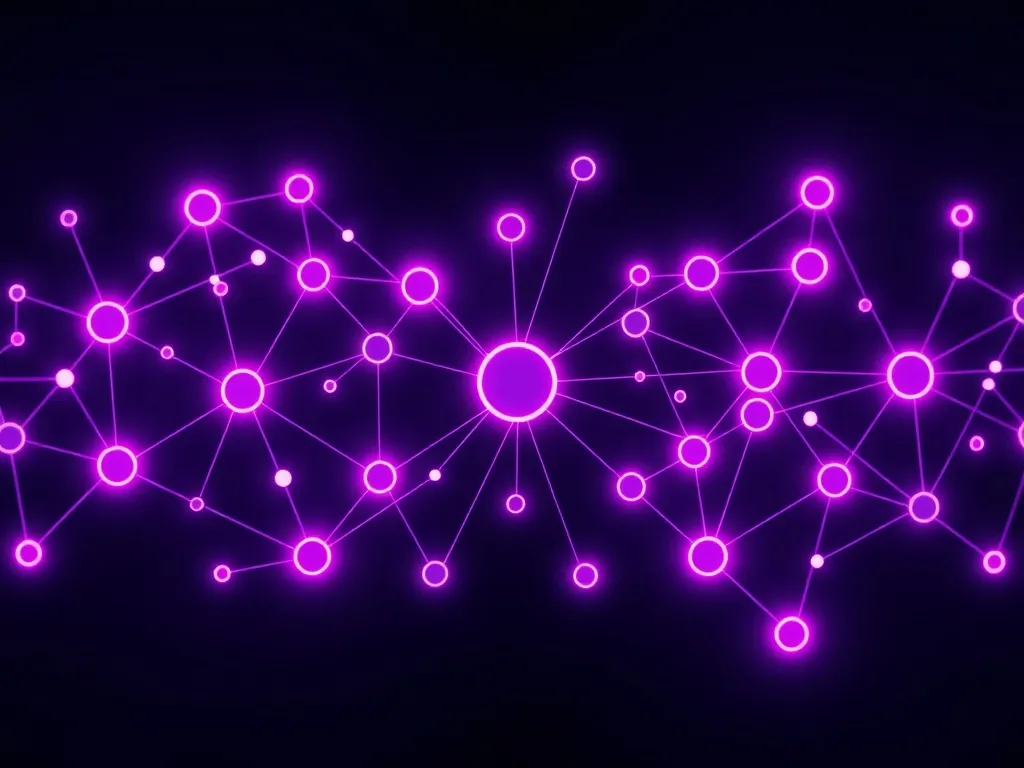
EduMind AI utilizes a split-processing architecture. Edge computing handles immediate UI feedback loops (e.g., micro-hints), while the centralized cloud core performs heavy computational tasks like Global Skill Correlation Matrix updates. This ensures latency remains below 150ms for critical interactions, maintaining learner flow state.
"By offloading non-critical inference to the edge, we reduce infrastructure costs by 35% while improving student engagement metrics by 22% compared to traditional centralized LMS models."
| Parameter | Minimum Spec | Optimized Spec | Latency Impact |
|---|---|---|---|
| Data Throughput | 10 Gbps | 40 Gbps (InfiniBand) | < 5ms |
| Inference Speed | 200ms | < 45ms (GPU-Accel) | < 15ms |
| Storage I/O | NVMe Gen 4 | NVMe Gen 5 RAID 0 | < 2ms |
| Model Size | 7B Parameters | 70B Parameters | Variable |
Deploying adaptive learning requires a robust data pipeline. As detailed in our Sapporo University Pilot, the transition from static to adaptive learning resulted in a 40% reduction in time-to-mastery. The algorithm identifies "plateaus" in learning and automatically injects alternative pedagogical explanations or lowers the abstraction level.
Current data processing split ensures that sensitive student information is anonymized at the edge before being transmitted to the central model for global training, complying with all GDPR/FERPA regulations as outlined in our Privacy Policy.
Access our technical API documentation and begin implementing data-driven personalization in your educational ecosystem today.